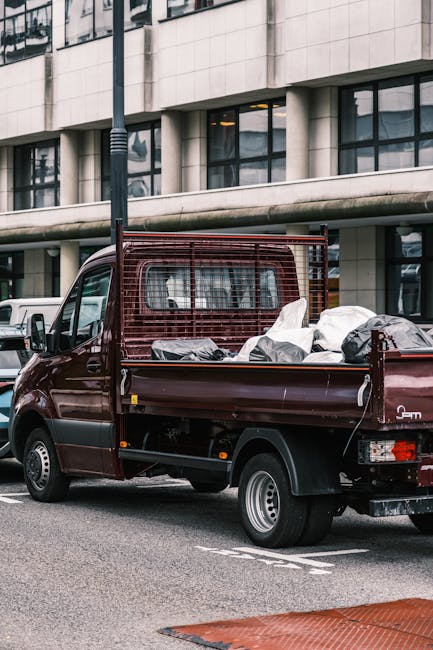
Knightsbridge Bulky Waste Rules After Removals: What to Do Next, What to Avoid, and How to Stay on the Right Side of the Rules
You've finished the removal, the rooms are finally clear, and then the awkward bit appears: the leftover bulky waste. Old wardrobes, a broken bed base, packaging, a sofa that didn't make the move, maybe a few odds and ends that somehow multiplied overnight. That's where Knightsbridge bulky waste rules after removals start to matter. The last thing you want is to leave items in the wrong place, miss a collection step, or create a cleanup headache just when you thought the hard work was done.
This guide explains the practical side of bulky waste after a move in Knightsbridge: how it usually works, what people tend to misunderstand, what to check before you dispose of anything, and how to make the post-removal stage feel much less chaotic. If you want a smoother end-to-end move, it can also help to understand the wider removal process through services such as removals, man and van, or house removals when you are planning what leaves, what stays, and what still needs a proper disposal route.
Let's face it, the move itself is only half the story. The tidy-up is where good planning either saves you time or quietly eats your weekend.
Why Knightsbridge bulky waste rules after removals Matters
Bulky waste after removals is not just a "left it outside and hope for the best" situation. In a place like Knightsbridge, space is tight, pavements are busy, and residents often share access routes, bin stores, courtyards, or service areas. One badly placed sofa or mattress can block access, annoy neighbours, and create a real issue for building management. That's before you even get into the practical side: moving awkward items again is tiring, risky, and often more expensive than doing it properly the first time.
The rules matter because post-removal waste usually falls into one of three buckets: items that can be reused, items that need specialist disposal, and items that can go with regular household waste only if they are small enough and correctly prepared. A lot of confusion comes from the word "bulky" itself. People hear it and assume it means anything large. In reality, it usually refers to items that are too large, heavy, or awkward for normal bins or bagged waste collection.
There is also a standards issue. In an area with high footfall and limited roadside tolerance, responsible disposal protects everyone. It keeps shared spaces clear, reduces fly-tipping risk, and helps avoid disputes with building staff or neighbours. If you are moving from a flat, a townhouse, or a managed property, the building may have its own rules too. Those can be just as important as any local waste procedure.
In our experience, the biggest surprise for people is timing. They think the move is the final deadline, but the bulky waste stage often needs to be handled before the keys are handed back. That tiny detail can change everything.
How Knightsbridge bulky waste rules after removals Works
The basic process is simple enough once you strip away the jargon. First, identify what needs to go. Then sort it into what can be reused, what can be donated or repurposed, and what genuinely counts as bulky waste or mixed waste. After that, you choose the right removal route. That might mean booking a specialist collection, using a licensed disposal route, or arranging for the items to be taken away as part of a broader move if the provider offers that kind of support.
A good removal plan starts with a proper walk-through. Open cupboards. Check behind doors. Look in the loft, cellar, balcony, under-bed storage, and any shared storage space. It sounds obvious, but a lot of bulky waste gets missed until the van has gone. Then it becomes an extra job, and extra jobs love becoming expensive jobs.
There's also the question of condition. Some items are clearly waste, like broken shelves or damaged mattresses. Others are borderline. A solid dining table, for example, may not be waste at all if it can be reused, but it may still need removal support because it is too bulky for a standard vehicle. That is where services like furniture pick up or removal services can be useful, especially when you want one organised job rather than several half-finished ones.
For people moving home or office, bulky waste can also overlap with packing waste, broken fittings, old office furniture, and damaged equipment. If you are dealing with a commercial relocation, it can help to look at commercial moves or office removals so the disposal plan matches the moving plan. It is a lot easier when everything is coordinated from the start.
Key Benefits and Practical Advantages
Getting bulky waste right after a removal does more than just tidy up the space. It protects your timeline, your budget, and your peace of mind.
- Less stress at handover: If a property is being inspected, cleared, or returned to a landlord or managing agent, a clean final state makes life easier.
- Safer access: Large items left in hallways, stairwells, or shared entrances are a trip hazard and a nuisance.
- Better recycling outcomes: Sorting items carefully can improve what gets reused or recycled rather than treated as mixed waste.
- Fewer delays: One planned disposal step is usually quicker than trying to solve a waste problem after the main move.
- Cleaner reputation with building staff: This matters more than people think in Knightsbridge, where access arrangements and concierge coordination can be part of the daily rhythm.
There is a quiet benefit too: a proper end-of-move clear-out gives you a sense of closure. You walk away knowing nothing has been abandoned, forgotten, or shoved into a corner to "deal with later". And later, of course, has a habit of becoming never.
Who This Is For and When It Makes Sense
This topic matters for a wide range of people. If you are moving out of a flat and have a sofa that will not fit in the lift, it matters. If you are clearing a house after downsizing, it matters. If you run an office and need to dispose of old desks, task chairs, filing cabinets, or broken storage, it matters even more.
It also matters if you are managing a property on someone else's behalf. Executors, landlords, letting agents, concierge teams, and building managers all need to think about the same thing: where does bulky waste go once the removal team has left?
Typical situations include:
- End-of-tenancy clearances
- Downsizing from a larger home
- Replacing furniture during a move
- Office relocations where old items are no longer needed
- Late-stage cleanup after packing and unpacking
- Removing items from basements, lofts, or storage rooms
If your move is more complicated than "load, drive, unload", you may find that support from home moves or office relocation services makes the whole process easier to coordinate. When bulky waste is part of the picture, coordination is everything.
Step-by-Step Guidance
Here is the cleanest way to handle bulky waste after removals without turning the day into a mess.
- Make a full item list. Walk through every room and write down anything too large for standard waste bags or anything you do not intend to keep.
- Separate reuse from disposal. Ask a simple question: can this still be used by someone else? If yes, it may not need to be treated as waste straight away.
- Check building rules. If you are in a managed block or shared property, ask about collection points, lifting restrictions, or permitted disposal areas.
- Confirm what your mover is handling. Some providers can remove bulky items as part of a broader service, while others only transport household goods. Don't assume.
- Measure awkward items. Doors, stairwells, and lift cages can become the bottleneck. A mattress may be technically removable, but not easily removable from your floor.
- Book the correct vehicle or service. If you need help getting large items out safely, a suitable van or team matters more than speed.
- Prepare access. Clear hallways, reserve parking if needed, and make sure someone is available to guide the collection.
- Keep proof where useful. If you are handing back a property, a few photos of the cleared state can save arguments later.
One small but important point: if you are moving during a tight window, sort bulky waste before the final day whenever possible. The last morning of a move is no time to realise the wardrobe has to come apart in the hallway. That is not a fun discovery. Not at all.
Expert Tips for Better Results
The best bulky waste plans are usually the boring ones, truth be told. Not dramatic. Just sensible.
- Take photos before you book anything. It helps you judge size, access, and how many hands are likely needed.
- Break down what can be safely dismantled. Flat-pack furniture, bed frames, and some shelving are easier to move in pieces.
- Keep screws, fittings, and loose parts together. Small bags taped to the item or labelled clearly can prevent confusion.
- Avoid last-minute guesswork. If you are unsure whether something counts as bulky waste, treat it as such and plan for proper removal.
- Think about weather and access. A wet pavement, a narrow entrance, or a busy service road can change the removal approach fast.
- Coordinate with your moving team early. Good removal crews work best when they know what they are expected to take, and what they are not.
There is also a people side to this. If your building has concierge staff or shared access routes, let them know what is happening. A five-minute conversation can stop a fifteen-minute problem. Sometimes even less. Simple as that.
If sustainability matters to you, it is worth checking how items are being handled after collection. The website's own recycling and sustainability page is a sensible place to understand the general approach to responsible disposal and resource use.
Common Mistakes to Avoid
Most bulky-waste headaches come from a few very predictable mistakes. The good news? They are easy to avoid once you know what to watch for.
- Leaving items in communal areas: This can cause access problems and complaints very quickly.
- Assuming "the movers will sort it": Never assume. Confirm exactly what is included.
- Mixing waste with reusable items: Once everything is bundled together, sorting becomes slower and messier.
- Ignoring access constraints: A large sofa may fit in the property but still fail at the stairwell or lift.
- Forgetting about timing: The removal van may have left, but the waste still needs a proper route out.
- Using the wrong service for the job: A small job can become a difficult one if the collection option is not suited to the item size.
The biggest one, in our experience, is the "I'll deal with it later" trap. It sounds harmless. It never is. A pile of mixed items in a hallway has a way of growing legs, metaphorically speaking.
Tools, Resources and Recommendations
You do not need fancy kit to manage bulky waste well, but a few practical tools make life easier.
- Tape measure: Useful for checking doors, lifts, hallways, and awkward furniture dimensions.
- Marker pen and labels: Handy for marking what stays, what goes, and what needs dismantling.
- Sturdy gloves: Especially useful for old furniture, broken edges, or dusty storage items.
- Basic screwdriver or hex key set: Often enough for dismantling common furniture pieces.
- Phone camera: Great for keeping a visual record and helping a removal team assess the load.
When you need a provider who can handle the transport side cleanly and efficiently, it can help to compare services such as man with van, man with van removal, and removal van. The right choice depends on access, item size, and whether you need just transport or a fuller lifting service as well.
If the removal is part of a larger move, you may also want to look at packing and unpacking services so you can separate what is going with the move from what should be disposed of. That kind of planning sounds small, but it saves a surprising amount of time.
Law, Compliance, Standards, or Best Practice
For this subject, it is better to speak in careful, practical terms than pretend there is one universal rule for every building, every item, and every disposal method. In the UK, waste needs to be handled responsibly, and businesses involved in removal or disposal should use suitable, lawful processes. For residents, the important point is simple: do not leave bulky waste in places where it creates hazards, blocks access, or leads to uncontrolled dumping.
Best practice usually means the following:
- Keep waste separate from items you still want to reuse or donate.
- Use a proper disposal or collection route for large items.
- Avoid blocking pavements, doorways, lifts, or communal access points.
- Confirm any building-specific rules before collection day.
- Work with providers that are clear about handling, transport, and safety.
Where a business or household is unsure, the safest approach is to ask questions early. A reliable provider should be able to explain what they can take, how they will access it, and what they expect you to prepare in advance. You should not be left guessing, especially on a tight move timetable.
If you want reassurance around how a removal provider approaches safety and responsibilities, the site's health and safety policy, insurance and safety, and terms and conditions pages are worth reviewing. They help set expectations, which is half the battle.
Options, Methods, or Comparison Table
Different post-removal situations call for different approaches. Here is a simple comparison to help you think it through.
| Option | Best for | Pros | Trade-offs |
|---|---|---|---|
| Reuse or donation route | Items still in decent condition | Good for sustainability, may reduce waste | Not suitable for damaged or unsafe items |
| Bulky waste collection | Single large items or small mixed loads | Simple and direct | May need planning around timing and access |
| Removal service with transport | When items must be moved out of a property and away in one go | Convenient, less lifting for you | Needs clear instructions and access checks |
| Full moving support | When bulky waste is part of a larger house or office move | Best for coordination and time-saving | May be more than you need for a very small job |
For many people, the sweet spot is a removal solution that combines transport with careful handling of awkward items. If your move is a bit larger or slightly chaotic - and many are - a broader service can be more practical than trying to patch together multiple small arrangements.
Case Study or Real-World Example
Picture a Knightsbridge flat clearance on a rainy Thursday morning. The main move is finished by lunchtime, but there is still a broken bookcase, a mattress, several flat-pack boxes, and an old armchair that no one wants to inherit. The hallway is narrow, the lift is booked for another resident, and the concierge is trying to keep the entrance clear. Not a disaster, but definitely one of those "right, let's sort this properly" moments.
The first thing that helps is a quick sort. The boxes go flat for recycling. The usable armchair is set aside for reuse. The damaged furniture is separated and identified for disposal. Then the team checks access, measures the item widths, and confirms the best extraction route. Instead of dragging everything around twice, the bulky items are handled once, in the right order, with the right vehicle and enough space to work. Much calmer. Much cleaner too.
That is the real lesson here: bulky waste after removals is not a separate headache if you plan for it early. It just becomes another line in the move plan. When that happens, the whole day feels easier. You still get the sigh of relief at the end, but without the messy part hanging around in the background.
Practical Checklist
Use this quick checklist before and after your move.
- List every bulky item in the property
- Separate reusable items from true waste
- Check access routes, stairwells, lifts, and parking
- Review any building or concierge requirements
- Measure the largest items before collection day
- Confirm what your removal team will and will not take
- Prepare labels, tools, and dismantled parts
- Keep hallways and doorways clear
- Take photos if you need proof of clearance
- Double-check that nothing has been left behind in storage areas
If you are still comparing options, it may help to look at removal company, removal companies, or removal van based on the size and complexity of the load. The best fit is usually the one that matches your access, not just your item count.
Get a free quote today and see how much you can save.
Conclusion
Knightsbridge bulky waste rules after removals are really about doing the last stage of a move properly. Keep access clear, separate what can be reused, check building expectations, and choose the right disposal route before the pressure builds. That simple bit of planning turns a messy afterthought into a clean finish.
If your move is already underway, the best next step is to slow down for ten minutes, list the bulky items, and decide what route each one needs. It sounds small. It is small. But small steps are what stop a move from getting complicated in the final hour.
And when the flat, house, or office is finally clear, there is a particular kind of quiet that follows. Nice quiet. The good sort.
Frequently Asked Questions
What counts as bulky waste after a removal?
Bulky waste usually means items that are too large, heavy, or awkward for regular bin collections. Common examples include sofas, mattresses, wardrobes, desks, chairs, and large broken household items.
Can I leave bulky waste in a communal hallway in Knightsbridge?
Usually, that is a bad idea. Communal hallways, entrances, and stairwells need to stay clear for safety and access. Building managers may also have their own rules, so check before placing anything there.
Should bulky waste be arranged before or after the main move?
Ideally, before or alongside the move, not after. That way, you are not left with a final-day scramble. Coordinating both at once is often much easier.
What if some of my items are still reusable?
Separate them from the waste. Reusable furniture or fittings can often be handled differently from damaged items. That keeps disposal cleaner and may reduce what actually needs to be thrown away.
Do movers always take bulky waste?
No, not automatically. Some removal teams handle bulky items, while others only move belongings from one place to another. Always confirm exactly what is included.
Is it cheaper to dismantle furniture before disposal?
Often, yes, if it can be done safely. Breaking down large furniture can make handling easier and may reduce the difficulty of access. But only dismantle items you can safely take apart.
What should I do with packing materials after removals?
Separate cardboard, wrap, and reusable packing materials from actual waste. Clean cardboard and similar materials are often easier to manage when kept apart from damaged items or mixed rubbish.
How do I know if my building has extra rules?
Ask the concierge, landlord, managing agent, or building office before collection day. Some properties have specific access times, collection points, or restrictions on leaving items outside.
What happens if I leave bulky waste too late?
You may end up paying more, delaying handover, or dealing with a rushed collection. It can also create access issues or complaints, which nobody wants at the end of a move.
What is the safest way to move a heavy item out of a property?
Use the right number of people, clear the route first, and choose a suitable vehicle or removal service. If an item is too awkward or too heavy, do not force it. That is how accidents happen.
Can bulky waste be part of an office move as well as a house move?
Absolutely. Office relocations often include old desks, filing cabinets, broken chairs, packaging, and obsolete equipment. That is why planning matters just as much in commercial moves as it does in homes.
Who should I contact if I want a more complete moving-and-clearance solution?
If you want the move and the bulky waste handled together, look at broader removal support such as removals near me, man and van removals, or removals van depending on your load size and access needs. The right setup is the one that keeps the whole day under control.